
(Reviewed by JD Jung)
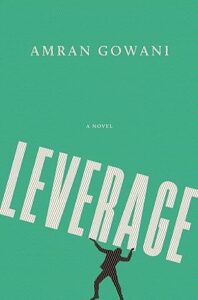

At only twenty-seven-year-old, Ali Jafar is a high-performing hedge fund manager for Prism Capital in San Francisco. He’s smart, respected, and has earned the confidence of his powerful boss, Paul Kingsley, founder of the firm and a man whose influence stretches deep into both government and law enforcement. But when Ali loses $300 million in a single investment, his life takes a sharp and terrifying turn. Rather than fire him, Kingsley gives him an ultimatum: recover the money in three months or face false charges of insider trading. And Kingsley has the leverage to accomplish that.
What follows is a downward spiral into desperation and depression. Raised by a single white mother he’s always resented, Ali has never had it easy. He’s endured racism throughout his life, and his current situation is no exception—particularly when dealing with Paul’s arrogant, racist son Brad. With his options running out, Ali turns to Damon, a loyal friend who connects him with an organization that traffics in “sensitive information”, and Ali decides to give it a chance. He starts making back the money, but of course, the story doesn’t end there. In fact, readers will not anticipate all the twists in the story.
Leverage is not only a faced paced thriller, but also an emotional story of its central character. Throughout the novel, the author uses self-deprecating humor to reveal Ali’s emotional state. Ali reevaluates the meaning of family and trust and realizes that you often must work with your perceived enemies to achieve your end goal. Just as important, he learns that he is not the only emotionally damaged person in his sphere.
Fast paced with surprises at every turn, Leverage offers a sharp critique of the industry’s excess and systemic exploitation. The hedge fund world is portrayed not just as greedy, but predatory built on a zero-sum mentality that chews up the vulnerable and rewards only the ruthless. And there are victims everywhere.