(Reviewed by JD Jung)
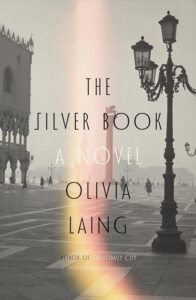

It’s September 17, 1974, and twenty-two-year-old art student Nicolas flees London after the death of his older lover, Alan, sensing that staying would invite suspicion he cannot afford. Venice seems like the perfect place to begin again. Instead, it becomes the gateway to a far more complicated emotional journey.
In Venice, Nicolas meets Danilo, a middle-aged costumer and set designer working with filmmakers Federico Fellini and Pier Paolo Pasolini. Their attraction is immediate, and their relationship soon deepens into a passionate partnership, both romantic and professional, as Nicolas becomes Danilo’s apprentice. Through this bond, the novel moves from Venice to various locations and most importantly to the heart of Italian cinema: Rome’s legendary Cinecittà Studios.
Author Olivia Laing skillfully intertwines an intimate love story with the vibrant, often chaotic world of filmmaking. As readers, we are drawn not only into the question of whether Nicolas and Danilo’s relationship can survive its inherent imbalances, but also into the lingering mystery of why Nicolas truly felt compelled to suddenly leave London. This tension is sustained throughout the novel, with Laing teasing conclusions rather than offering easy answers.
Although fictional, The Silver Book is grounded in real cinematic history. Readers are immersed in the eccentric personalities and creative struggles of Fellini and Pasolini, from the casting challenges surrounding Fellini’s Casanova—including the choice of casting Donald Sutherland—to the making of Pasolini’s final, controversial film, Salò, based on the Marquis de Sade’s “120 Days of Sodom”, using it as an allegory, warning about the brutality and return of fascism.
The story takes us up to the murder of Pasolini, and I found every part of the novel fascinating. Each segment of the book felt purposeful and compelling, balancing personal drama with political ideology. It was elegantly written while also using stark descriptions of putrid odors and horrid sights. It will not only appeal to fans of post-WWII Italian cinema, but also to those who enjoy an engaging read. The Silver Book offers a moving blend of romance, art, and politics, making it as thought-provoking as it is absorbing.