
(Reviewed by JD Jung)
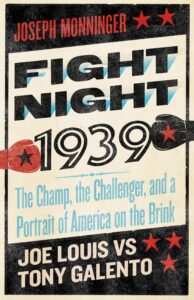

I had never heard of Tony Galento before reading this book—the rough-edged heavyweight best known for flooring Joe Louis in the third round of their championship bout. At first glance, his story might seem like a footnote in boxing history, but author Joseph Monninger transforms it into something far more captivating. What begins as the tale of a street brawler from Orange, New Jersey, expands into a vivid exploration of American society, race, class, and identity in the early twentieth century.
Galento comes alive as both a product and symbol of his environment. His appeal, Monninger shows, was rooted not in technique but in his connection to poor and working-class Italian Americans. For his community, Galento’s rise represented the success of one of their own. Described as more Neanderthal than merely obese, this undisciplined, witty tavernkeeper drank and ate to excess even before a fight. In fact, he was often referred to as “Two Ton Tony” or later the “Ape Man”.
What makes Fight Night 1939 stand out is how Monninger balances biography with the sociological aspects of the sport, presenting a full picture of the times and American society. There’s no filler here—every page contributes to the rhythm and grit of the story. The fight sequences are written with real momentum and tension, pulling readers into the ring. Yet, just as important, the book situates these bouts within the broader racial and cultural landscape of the era, particularly through its discussion of Jim Crow laws and their impact on Joe Louis’s career.
This is how a biography should be written: concise, engaging, and rich in context. Even readers who have no interest in boxing will find themselves fascinated by Fight Night 1939 —and the America that made these individuals. Highly recommended.